


Moisture-proofing and barrier effect: Directly affecting the shelf life of food
The paper tube itself has a certain degree of permeability. If it is used to package dry food (such as biscuits, milk powder), additional barrier treatment is required; otherwise, the food is prone to absorb moisture and become soft.
Common solutions:
Single-layer food paper tube: Suitable only for short-term packaging or in dry environments (such as straws, paper sticks).
Laminated paper tube: An inner layer of food-grade PE or PLA (polylactic acid, biodegradable) is applied, providing high moisture-proofing performance. It is suitable for ice cream cones and cold drink cups.
Composite paper tube: A structure composed of paper, aluminum foil and PE, with excellent oxygen and water vapor barrier properties, suitable for long-term shelf-life products such as potato chips and coffee powder.
Coated paper tubes: Utilizing water-based barrier coatings (such as acrylic or biobased paints), they are biodegradable and meet the barrier requirements, and represent an environmental trend in recent years.
Tip: For foods that require refrigeration or freezing (such as ice cream cones), be sure to choose a film that can withstand low temperatures. Otherwise, the ordinary PE will become brittle and crack below -10℃.
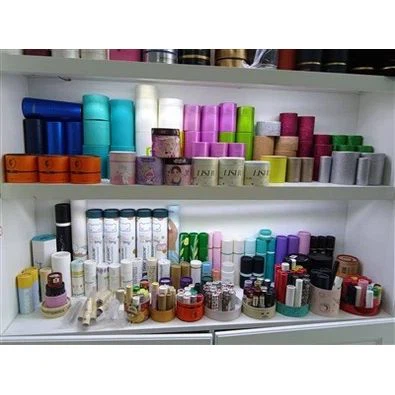
Appearance and Customization: Food Packaging is Also a Brand Display
Food paper tubes are often directly exposed to consumers, so the appearance design is of great importance.
Custom printing: Brand logos, nutritional information tables, barcodes, and fun patterns can be printed on the tube body. It is recommended to use flexographic printing or digital printing. Small batch orders are also supported.
End face treatment: It can be made into easily detachable lines, serrated edges (similar to aluminum foil cartons), or equipped with plastic or paper end caps.
Shape customization: The round shape is the mainstream. Elliptical and square shapes are also available (they need to be die-cut and then formed).
Color and texture: The natural-colored cowhide paper presents a natural look, the white paper tube shows a clean appearance, and the matte film enhances the feel.
Many snack brands stand out on the shelves by using colorful printed paper cans, and even transform the paper tubes into collectible IP accessories.
Environmental Protection and Compliance: Adapting to the Global Trend of Plastic Reduction
The EU SUP Directive and China's "14th Five-Year Plan" for Plastic Pollution Control all explicitly restrict the use of disposable plastic tableware and packaging. Paper tubes, as an alternative to plastic, have inherent advantages:
Recyclable: Pure paper tubes (without coating) can be directly placed in the waste paper recycling system.
Biodegradable: The paper tubes with bio-based coating can be composted at home or industrially.
Carbon reduction: The carbon footprint of virgin pulp paper tubes is much lower than that of plastic tubes.
Consumer favorability: The survey shows that over 70% of consumers are more likely to purchase food with paper packaging.
However, it should be noted that paper tubes coated with aluminum foil or plastic film have increased difficulty in recycling. If your brand emphasizes "100% paper", it is recommended to choose a water-based coating solution without plastic.
What can we do for your food packaging?
We specialize in the research and production of food-grade paper tubes and offer:
✅ Full-size customization available, ranging from 5mm in diameter (syringe) to 200mm (sharing container)
✅ Food-grade laminating film (PE/PLA/water-based coating)
✅ Multi-color flexographic/digital printing, supporting brand patterns
✅ Complete with end caps, tear-off lines, and moisture-proof base pads
✅ Provide compliance documents (test reports, MSDS, BPA-free declaration)