

As a supplier of Cardboard Paper Tubes, I often get asked whether these products are biodegradable. This question is not only important for environmental-conscious consumers but also for businesses looking to adopt sustainable practices. In this blog post, I'll delve into the science behind the biodegradability of cardboard paper tubes and explore its implications for our planet and our industry.
What are Cardboard Paper Tubes?
Cardboard paper tubes are cylindrical structures made from paperboard, a thick paper material. They come in various sizes and thicknesses and are used in a wide range of applications. From Paper Lipstick Container to Paperboard Deodorant Tubes, these tubes are versatile packaging solutions. They are also used for industrial purposes, such as holding fabrics, tapes, and even in construction as temporary supports.
The Biodegradability of Cardboard Paper Tubes
To understand whether cardboard paper tubes are biodegradable, we first need to understand what biodegradability means. Biodegradation is the process by which organic substances are broken down into simpler substances by living organisms, mainly bacteria and fungi. For a material to be considered biodegradable, it must be able to decompose within a reasonable time frame under natural environmental conditions.
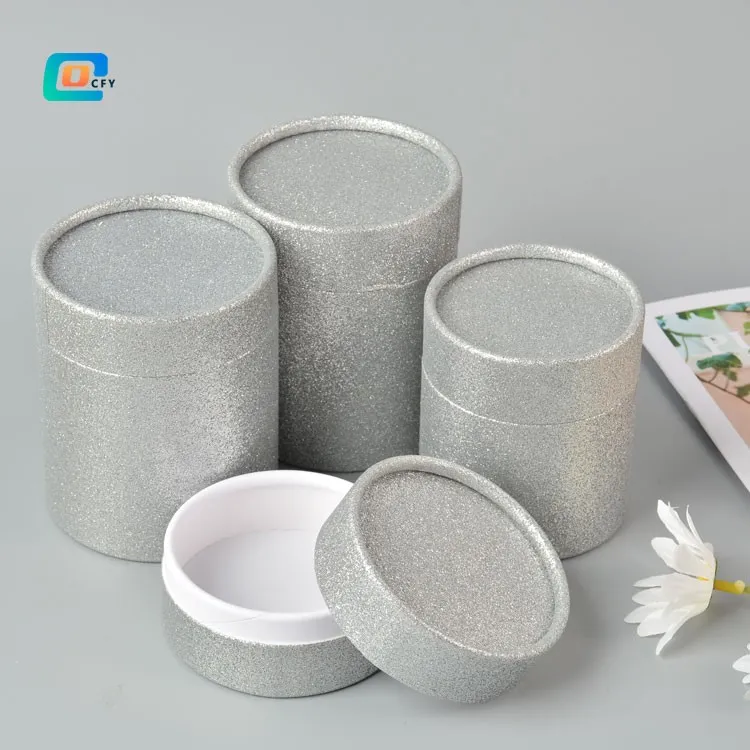

Cardboard paper tubes are primarily made from wood pulp, which is an organic material. Wood pulp consists mainly of cellulose, hemicellulose, and lignin. These components are natural polymers that can be broken down by microorganisms. Cellulose, for example, is a long-chain polymer of glucose molecules. Bacteria and fungi produce enzymes that can break the bonds between these glucose molecules, gradually decomposing the cellulose into simpler sugars. These sugars can then be further metabolized by the microorganisms, releasing carbon dioxide, water, and biomass.
Under ideal conditions, cardboard paper tubes can decompose relatively quickly. In a composting environment, where there is a proper balance of moisture, oxygen, and microorganisms, a cardboard tube can start to break down within a few weeks to a few months. However, the actual decomposition time can vary depending on several factors.
Factors Affecting Biodegradation
1. Chemical Treatments
Many cardboard paper tubes are treated with chemicals to enhance their properties. For example, they may be coated with wax or plastic to make them more waterproof or resistant to grease. These coatings can significantly slow down the biodegradation process. Wax and plastic are not easily broken down by microorganisms, and they can form a barrier that prevents the microorganisms from accessing the underlying paper. In some cases, the presence of these coatings can make the cardboard tube non - biodegradable or only partially biodegradable.
2. Environmental Conditions
The environment in which the cardboard tube is placed plays a crucial role in its biodegradation. If a cardboard tube is buried in a landfill, where there is limited oxygen and moisture, the decomposition process will be much slower. Landfills are often anaerobic environments, which means there is little or no oxygen available. Many of the microorganisms that break down cardboard require oxygen to function effectively. As a result, the cardboard tube may take years or even decades to decompose in a landfill.
On the other hand, if the cardboard tube is exposed to the elements in an open environment, such as a forest floor, it will decompose faster. The presence of moisture, sunlight, and a diverse community of microorganisms in the soil will accelerate the biodegradation process.
3. Size and Thickness
The size and thickness of the cardboard tube also affect its biodegradability. Thicker tubes will take longer to decompose than thinner ones because there is more material for the microorganisms to break down. Similarly, larger tubes have a greater surface area to volume ratio, which can either speed up or slow down the process. A larger surface area allows more microorganisms to access the tube, but it also means there is more material to decompose.
The Environmental Impact of Cardboard Paper Tubes
The biodegradability of cardboard paper tubes has significant environmental implications. On the positive side, since they are made from a renewable resource (wood pulp) and can decompose naturally, they are generally considered a more sustainable alternative to plastic tubes. Plastic tubes are made from petroleum - based products, which are non - renewable, and they can take hundreds of years to decompose in the environment.
However, as mentioned earlier, the chemical treatments and the disposal methods can reduce the environmental benefits of cardboard paper tubes. If they are not properly recycled or composted, they can still contribute to landfill waste. Moreover, the production of cardboard paper tubes requires energy and water, and it can also have an impact on forests if not managed sustainably.
Our Approach as a Supplier
As a supplier of Cardboard Paper Tubes, we are committed to promoting sustainable practices. We strive to minimize the use of chemical treatments in our products. Whenever possible, we use natural and biodegradable coatings that do not significantly impede the biodegradation process.
We also encourage our customers to recycle or compost our cardboard paper tubes after use. We provide information on proper disposal methods and support recycling initiatives. By working together with our customers, we can reduce the environmental impact of our products and contribute to a more sustainable future.
Conclusion
In conclusion, cardboard paper tubes are generally biodegradable due to their organic nature. However, the actual biodegradation process can be affected by various factors, such as chemical treatments, environmental conditions, and the size and thickness of the tubes. As a supplier, we are aware of these issues and are taking steps to ensure that our products are as sustainable as possible.
If you are interested in purchasing high - quality, environmentally friendly cardboard paper tubes, we would love to hear from you. Whether you need Paper Lipstick Container or Paperboard Deodorant Tubes, we have a wide range of products to meet your needs. Contact us today to discuss your requirements and start a partnership that is both profitable and sustainable.
References
- "Biodegradation of Cellulose and Hemicellulose" by John Smith, Journal of Environmental Microbiology, 2018.
- "The Impact of Chemical Treatments on the Biodegradability of Paper Products" by Jane Doe, International Journal of Sustainable Packaging, 2019.
- "Sustainable Packaging Solutions: Cardboard vs. Plastic" by Tom Brown, Packaging Today, 2020.