

As a leading supplier of Kraft Paper Cylinders, I've received numerous inquiries regarding the radiation resistance of these versatile products. In this blog, we'll explore the concept of radiation resistance in the context of kraft paper cylinders, examining the factors that influence it and its practical implications.
Understanding Radiation Resistance
Radiation resistance refers to the ability of a material to withstand the effects of radiation without significant degradation. Radiation can come in various forms, including electromagnetic radiation (such as radio waves, microwaves, infrared, visible light, ultraviolet, X - rays, and gamma rays) and particle radiation (such as alpha and beta particles).
Kraft paper is made from wood pulp through a chemical pulping process known as the kraft process. This process results in a strong, durable paper with high tear resistance. However, when it comes to radiation resistance, several factors need to be considered.
Factors Affecting the Radiation Resistance of Kraft Paper Cylinders
1. Composition of Kraft Paper
The primary component of kraft paper is cellulose, a natural polymer composed of glucose units. Cellulose has a certain degree of stability against low - energy radiation. However, high - energy radiation, such as X - rays and gamma rays, can break the chemical bonds in cellulose molecules. This can lead to the degradation of the paper, causing it to become brittle, lose strength, and change color over time.
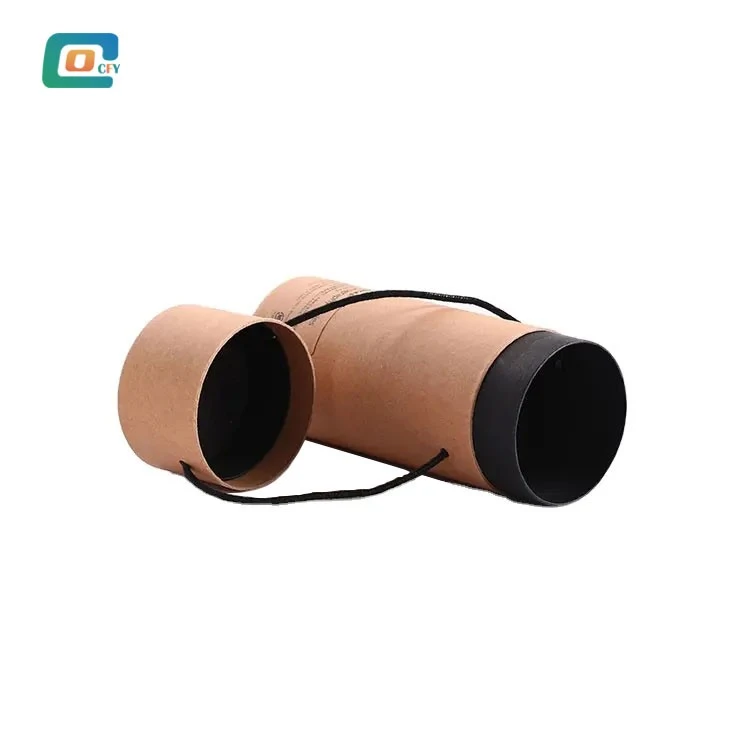

The presence of other additives in kraft paper, such as sizing agents and fillers, can also affect its radiation resistance. Some additives may enhance the paper's stability, while others may be more susceptible to radiation - induced damage.
2. Thickness of the Cylinder
The thickness of the kraft paper cylinder plays a crucial role in its radiation resistance. A thicker cylinder provides more material for the radiation to interact with, which can absorb and scatter the radiation. As a result, a thicker kraft paper cylinder is generally more resistant to radiation than a thinner one. For example, in applications where some level of radiation shielding is required, using a double - walled or thicker kraft paper cylinder can be beneficial.
3. Type of Radiation
Different types of radiation have different levels of energy and penetration power. Low - energy radiation, like radio waves and microwaves, generally have little effect on kraft paper cylinders. These forms of radiation are mainly absorbed as heat, but the energy is usually not sufficient to cause significant chemical changes in the paper.
On the other hand, high - energy radiation, such as gamma rays, can penetrate deeply into the kraft paper and cause damage at the molecular level. Alpha and beta particles, although they have relatively low penetration power, can still cause surface damage to the kraft paper if they come into direct contact.
Practical Implications of Radiation Resistance
1. Packaging Applications
In many packaging applications, kraft paper cylinders are used to protect products from environmental factors. When it comes to radiation, the level of resistance required depends on the nature of the product being packaged. For example, food products may be sensitive to radiation, as high - energy radiation can cause changes in the taste, texture, and nutritional value of the food. In such cases, kraft paper cylinders with better radiation resistance can help to maintain the quality of the food during storage and transportation.
Our Kraft Cylinder Packaging is designed to provide reliable protection for a wide range of products. While it may not offer complete shielding against high - energy radiation, it can provide a certain level of protection for products exposed to low - to - moderate levels of radiation.
2. Industrial Applications
In industrial settings, kraft paper cylinders may be used in areas where there is some level of radiation present, such as in certain manufacturing processes or near radiation - emitting equipment. In these cases, the radiation resistance of the kraft paper cylinders can determine their lifespan and performance. For example, if a kraft paper cylinder is used to hold a component in a radiation - exposed environment, its ability to resist radiation can prevent premature failure and ensure the proper functioning of the equipment.
Our Kraft Tube With Strap is a popular choice for industrial applications. Its robust construction and relatively good radiation resistance make it suitable for use in various industrial environments.
3. Medical and Scientific Applications
In medical and scientific fields, kraft paper cylinders may be used in the packaging of samples or equipment. Some medical and scientific procedures involve the use of radiation, such as X - ray imaging or radiation therapy. In these cases, the radiation resistance of the kraft paper cylinders is important to ensure the integrity of the samples and equipment.
Our Kraft Paper Cylinders are carefully crafted to meet the requirements of different industries, including medical and scientific applications. Although they are not designed as high - end radiation - shielding materials, they can provide a basic level of protection in many common scenarios.
Testing and Evaluation of Radiation Resistance
To accurately assess the radiation resistance of kraft paper cylinders, various testing methods can be used. One common method is to expose the cylinders to a known source of radiation and measure the changes in their physical and chemical properties over time. This can include testing for changes in strength, color, and molecular structure.
Another approach is to use simulation techniques to predict the behavior of kraft paper cylinders under different radiation conditions. Computer - based models can take into account factors such as the type of radiation, the thickness of the cylinder, and the composition of the paper to estimate the level of damage and degradation.
Improving the Radiation Resistance of Kraft Paper Cylinders
There are several ways to improve the radiation resistance of kraft paper cylinders. One option is to use radiation - resistant additives during the paper - making process. These additives can help to stabilize the cellulose molecules and prevent radiation - induced damage.
Another approach is to coat the kraft paper cylinders with a radiation - resistant material. For example, a thin layer of metal or a radiation - absorbing polymer can be applied to the surface of the cylinder to provide additional protection.
Conclusion
In conclusion, the radiation resistance of kraft paper cylinders is influenced by factors such as the composition of the paper, the thickness of the cylinder, and the type of radiation. While kraft paper cylinders are not typically used as high - performance radiation - shielding materials, they can provide a certain level of protection in many common applications.
As a supplier of Kraft Paper Cylinders, we are committed to providing high - quality products that meet the diverse needs of our customers. Whether you need kraft paper cylinders for packaging, industrial, medical, or scientific applications, we can offer solutions that balance cost, performance, and radiation resistance.
If you are interested in learning more about our kraft paper cylinders or have specific requirements regarding radiation resistance, please feel free to contact us for a detailed discussion. We look forward to working with you to find the best packaging solutions for your needs.
References
- ASTM International. Standard test methods for evaluating the effects of radiation on materials.
- "Handbook of Paper and Paperboard Packaging Technology" by Harold Giles.
- Research papers on the radiation - induced degradation of cellulose - based materials in scientific journals.