

When it comes to puzzles, two terms often come up: jigsaw puzzles and picture puzzles. At first glance, they might seem quite similar, but upon closer inspection, there are distinct differences between the two. As a jigsaw puzzle supplier, I've had the opportunity to delve deep into the world of puzzles and understand these nuances. In this blog, I'll explore the differences between jigsaw puzzles and picture puzzles, and also highlight the unique features of jigsaw puzzles that make them a popular choice among puzzle enthusiasts.
Definition and Basic Concept
Let's start with the basics. A jigsaw puzzle is a tiling puzzle that requires the assembly of numerous irregularly shaped pieces. These pieces, when correctly put together, form a complete picture. The pieces are typically made of cardboard or wood, and they interlock with each other. The challenge lies in finding the right fit for each piece and gradually building the entire image.
On the other hand, a picture puzzle is a broader term that encompasses various types of puzzles related to pictures. It can include puzzles where you have to arrange cut - out pieces to form a picture, but it can also refer to puzzles like spot - the - difference games, where you need to find the differences between two seemingly identical pictures. Picture puzzles can be in different formats, such as printed on paper, presented digitally on a screen, or even in the form of a 3D display.
Physical Characteristics
One of the most obvious differences between jigsaw puzzles and picture puzzles lies in their physical form. Jigsaw puzzles are usually sold as a set of physical pieces. The pieces are carefully cut from a larger sheet of material, and each piece has a unique shape that is designed to fit with specific other pieces. The edges of jigsaw puzzle pieces are often serrated or have tabs and blanks, which help in interlocking them.
Picture puzzles, however, can vary widely in their physical nature. Some picture puzzles, like those in magazines, are simply printed on paper and may not have the interlocking mechanism. You might have to cut out the pieces yourself if it's a DIY picture puzzle. Digital picture puzzles, such as those found on mobile apps, have no physical form at all. They are presented on a screen, and you use your fingers or a cursor to interact with the puzzle elements.
Difficulty Level and Complexity
Jigsaw puzzles are known for their varying levels of difficulty. The complexity of a jigsaw puzzle can be determined by several factors. The number of pieces is a significant factor. For example, a Children Jigsaw Puzzles might have as few as 10 - 20 pieces, making it easy for young children to complete. On the other hand, a large - scale jigsaw puzzle for adults can have over 1000 pieces, which can take days or even weeks to finish.
The design of the picture on the jigsaw puzzle also affects the difficulty. A puzzle with a complex, detailed picture, such as a landscape with many trees and rocks, will be more challenging than a puzzle with a simple, solid - colored background and a few distinct objects.
Picture puzzles also come in different difficulty levels, but the factors determining their difficulty are different. In spot - the - difference picture puzzles, the number of differences and how well they are hidden are the main factors. In puzzles where you arrange cut - out pieces, the similarity of the pieces and the complexity of the overall picture play a role. However, since picture puzzles can be more diverse in their format, it's harder to generalize about their difficulty levels compared to jigsaw puzzles.
Engagement and Interaction
Jigsaw puzzles offer a tactile and hands - on experience. When you work on a jigsaw puzzle, you physically pick up the pieces, turn them around, and try to fit them together. This tactile interaction can be very engaging, as it allows you to feel the texture of the pieces and the satisfaction of finally finding the right fit. It's a great way to relax and focus your mind, as you get lost in the process of assembling the pieces.
Picture puzzles, especially digital ones, offer a different kind of engagement. Digital picture puzzles often come with features like hints, timers, and leaderboards. This can add an element of competition and excitement. For example, in a spot - the - difference game, you might be racing against the clock to find all the differences. However, the lack of physical interaction in digital picture puzzles can make them less immersive in terms of the hands - on experience compared to jigsaw puzzles.
Educational Value
Both jigsaw puzzles and picture puzzles have educational value, but in different ways. Jigsaw puzzles are excellent for developing fine motor skills, especially in children. Picking up small puzzle pieces, manipulating them, and fitting them together requires precise hand - eye coordination. They also enhance spatial awareness, as you need to understand how different pieces fit together in a larger space.
Picture puzzles, particularly spot - the - difference games, are great for improving observation skills. You need to pay close attention to details to find the differences between the pictures. Picture puzzles can also be used to teach concepts like pattern recognition and visual discrimination.
Variety of Themes and Designs
Jigsaw puzzles come in an incredibly wide range of themes and designs. You can find jigsaw puzzles with images of animals, landscapes, famous artworks, movie scenes, and much more. As a jigsaw puzzle supplier, we offer a diverse collection of 50 100 Piece Jigsaw Puzzles that are suitable for different age groups and interests. Each theme is carefully selected to appeal to a broad audience.

Picture puzzles also have a variety of themes, but the range might be more limited in some cases. For example, spot - the - difference games often have themes related to everyday life, cartoons, or nature. However, they can also be customized for specific educational or promotional purposes.
Packaging
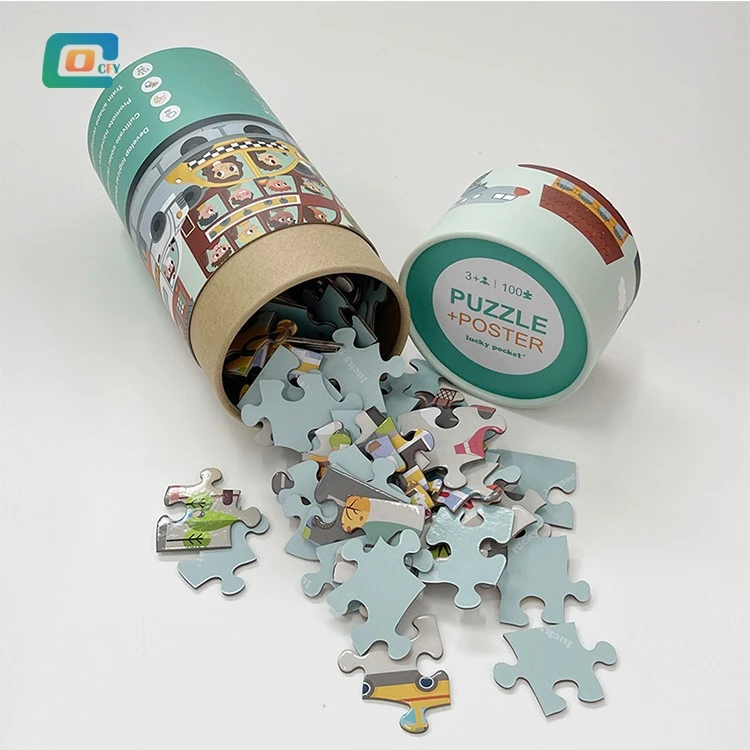
Jigsaw puzzles are typically packaged in a box that contains all the pieces. The box usually has a picture of the completed puzzle on the front, which gives you an idea of what you're working towards. Some jigsaw puzzles, like our Jigsaw Puzzle with Paper Tube Package, come in unique packaging that not only protects the pieces but also adds an aesthetic touch.
Picture puzzles, depending on their format, can have different packaging. Magazines with picture puzzles are simply bound in the magazine format. Digital picture puzzles have no packaging at all, while physical DIY picture puzzles might come in an envelope or a simple paper wrapper.
Market Demand and Popularity
Jigsaw puzzles have a long - standing popularity. They are a classic form of entertainment that appeals to people of all ages. The tactile experience and the sense of accomplishment when completing a jigsaw puzzle make them a favorite among puzzle lovers. In recent years, there has been a resurgence in the popularity of jigsaw puzzles, as more people are looking for offline, hands - on activities to relax and unwind.
Picture puzzles also have their own market demand. Digital picture puzzles, in particular, are very popular among younger generations who are more accustomed to using technology. They are easily accessible and can be played on the go. However, the overall market for jigsaw puzzles seems to be more stable and widespread, as they have a broader appeal across different age groups.
Why Choose Jigsaw Puzzles from Our Supplier
As a jigsaw puzzle supplier, we take pride in offering high - quality jigsaw puzzles. Our puzzles are made from durable materials, ensuring that the pieces last for a long time. We have a wide selection of themes and difficulty levels to suit every customer's needs. Whether you're looking for a simple children's puzzle or a challenging 1000 - piece puzzle for adults, we have it.
Our unique packaging options, like the paper tube package, not only protect the puzzle pieces but also make for an attractive gift. We also ensure that our puzzles are produced in an environmentally - friendly way, using sustainable materials whenever possible.
If you're interested in purchasing jigsaw puzzles for personal use, as a gift, or for resale, we would love to hear from you. We offer competitive prices and excellent customer service. Contact us to discuss your requirements, and let's start a great puzzle - related partnership.
References
- "The History and Science of Jigsaw Puzzles" by Puzzle Enthusiast Magazine
- "Picture Puzzles: A Comprehensive Guide" by Puzzle World Publishers
- Industry reports on the puzzle market trends